Saturday, July 18, 2020

Mira of South Beach

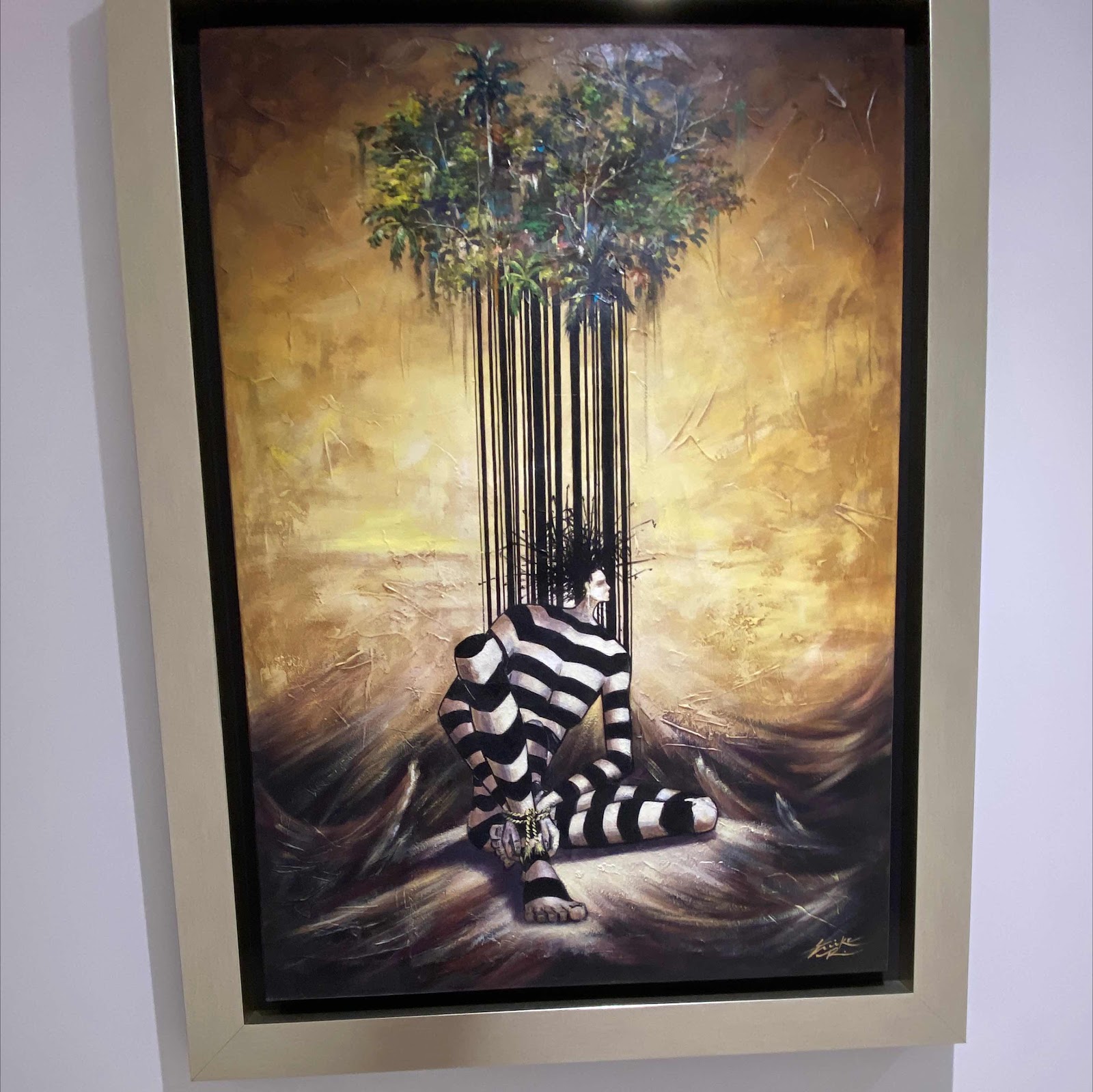
Mira is a Miami artist who paints furniture and paintings.  I originally bought a  table with four chairs that she did. I bought them in an auction from an estate sale in Pompano Beach in the summer of 202004.

Now have six chairs, two of which are are in-the-style of Mira but are originals by us.  Here are the pictures.  I'm a little confused by the identity of Mira which I discuss after the pictures.

Mira South Beach Artist

Mira Miami Painted Chair


Carmen and Ariana Chairs

I do not have lots of info on who Mira, the artist is.  Here's some links but I find it tricky to figure out exactly which relate to the Mira who created this table and chair.

https://www.facebook.com/mirasouthbeach
https://www.miraartstudio.com/

Here's some info from Mira of South Beach's Facebook page:
Mira has been a longtime, well recognized, Miami Beach artist. Her unique approach to painting stems from the mixture of a classical fine art background and the whimsical tropical pop of her present environment.
Her life and experiences of living by the beach, playing in the sun, and interacting with the diverse cultures of South Florida, are expressed with her rich and vibrant color pallet.
Mira's positive outlook bursts out in every piece that she creates, and the glass like finish reflects each and every one of us which includes us as a part of her world.
Her collectors include fashion designers Donatella Versace and Domenico Dolce of Dolce and Gabbana. Her work can also be seen in Oliver Stone's motion picture "Any Given Sunday", which was filmed in Miami.
Mira has exhibited work in galleries throughout the US and Canada:
ONE WORLD GALLERY - MAUI, HI
VAIL VILLAGE ARTS - VAIL, CO
799 GALLERY - NEW YORK, NY
KENNEDY GALLERY - KEY WEST, FL
KENNEDY GALLERY - MIAMI BEACH, FL
KENNEDY GALLERY - PROVINCETOWN, MA
MASTERPIECE GALLERIES - BOCA RATON, FL
POWELL GALLERY - SAN FRANCISCO, CA
ART MODE GALLERY - ONTARIO, CANADA
SHER GALLERIES - AVENTURA, FL
PERMANENT GALLERY REPRESENTATION:
EFFUSION GALLERY - MIAMI BEACH http://www.effusiongallery.com
GALLERY MICHELANGELO - LAS VEGAS
POP GALLERY - ORLANDO @ WALT DISNEY WORLD & HOYPOLOI GALLERY - CHICAGO http://www.hoypoloi.com
MIRA'S OFFICIAL WEBSITE COMING SOON....

Monday, July 13, 2020

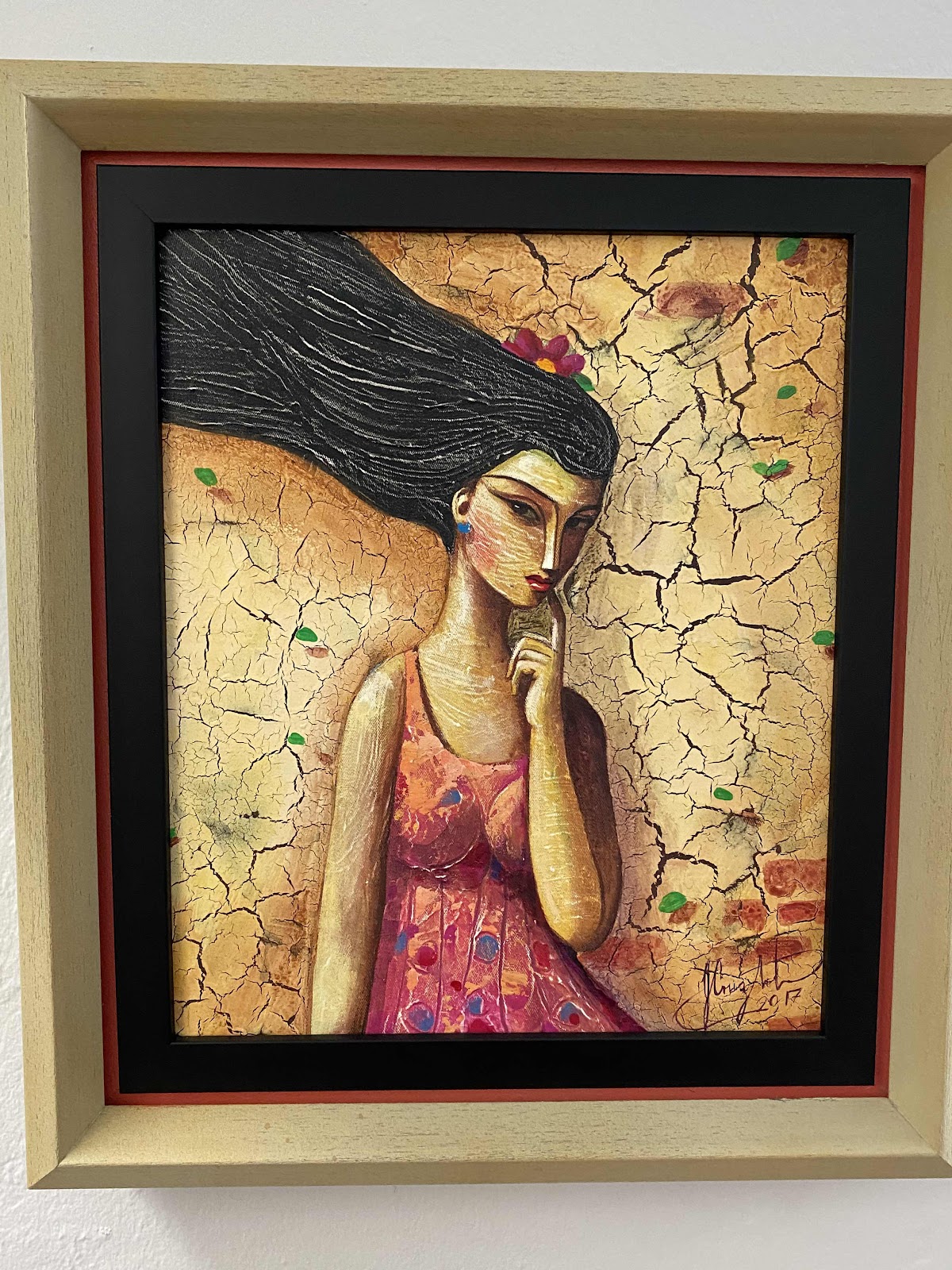
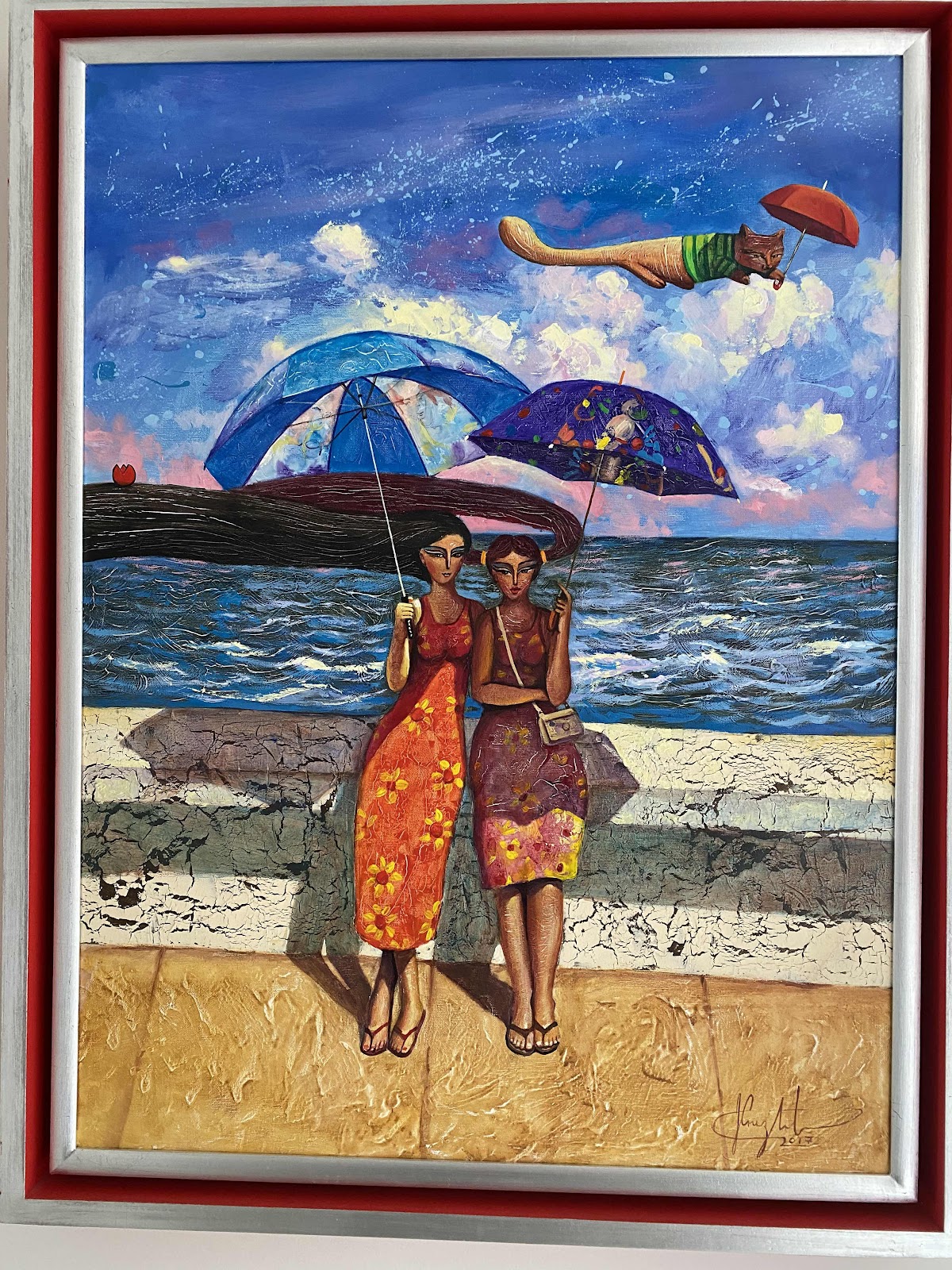
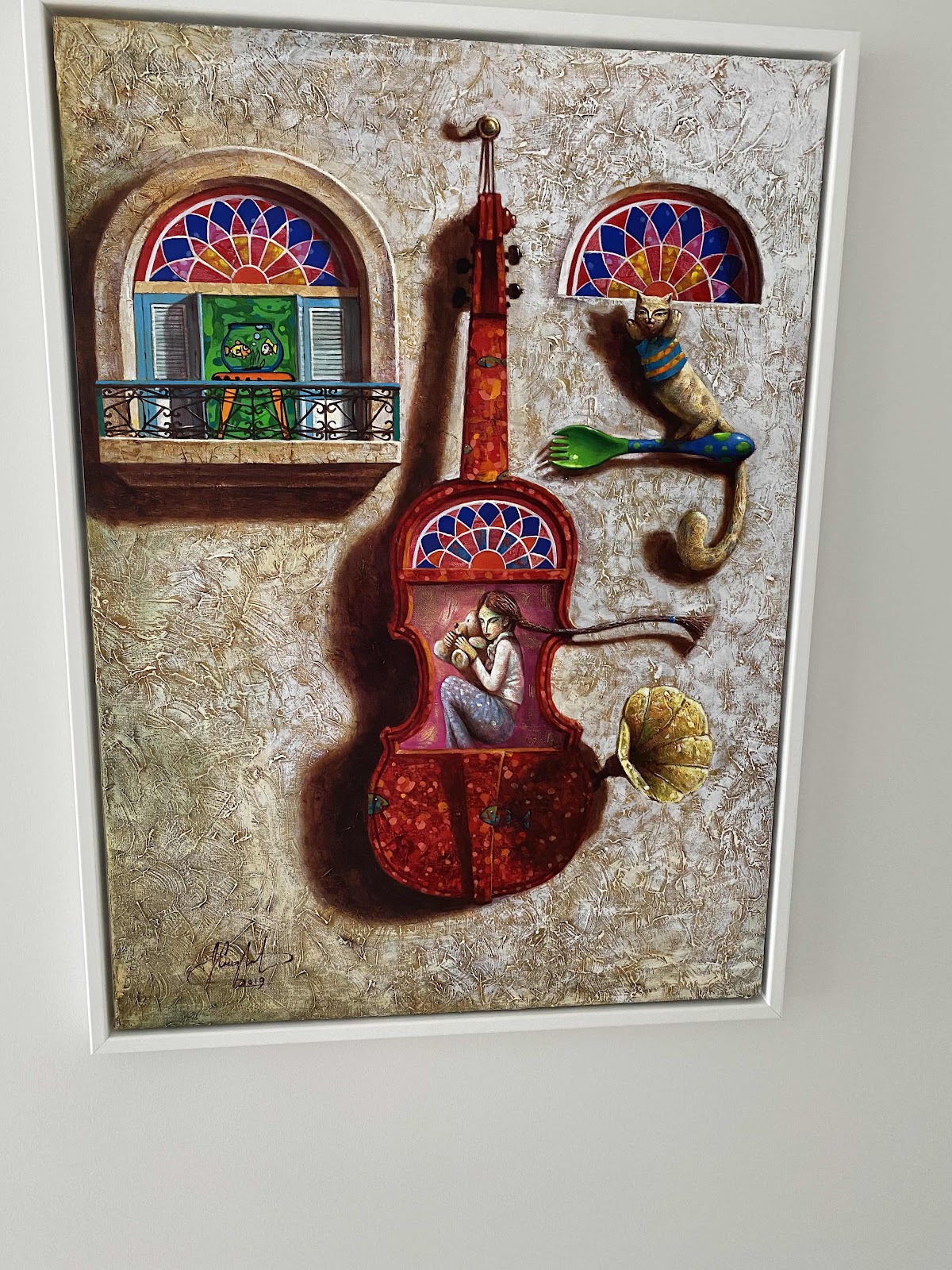
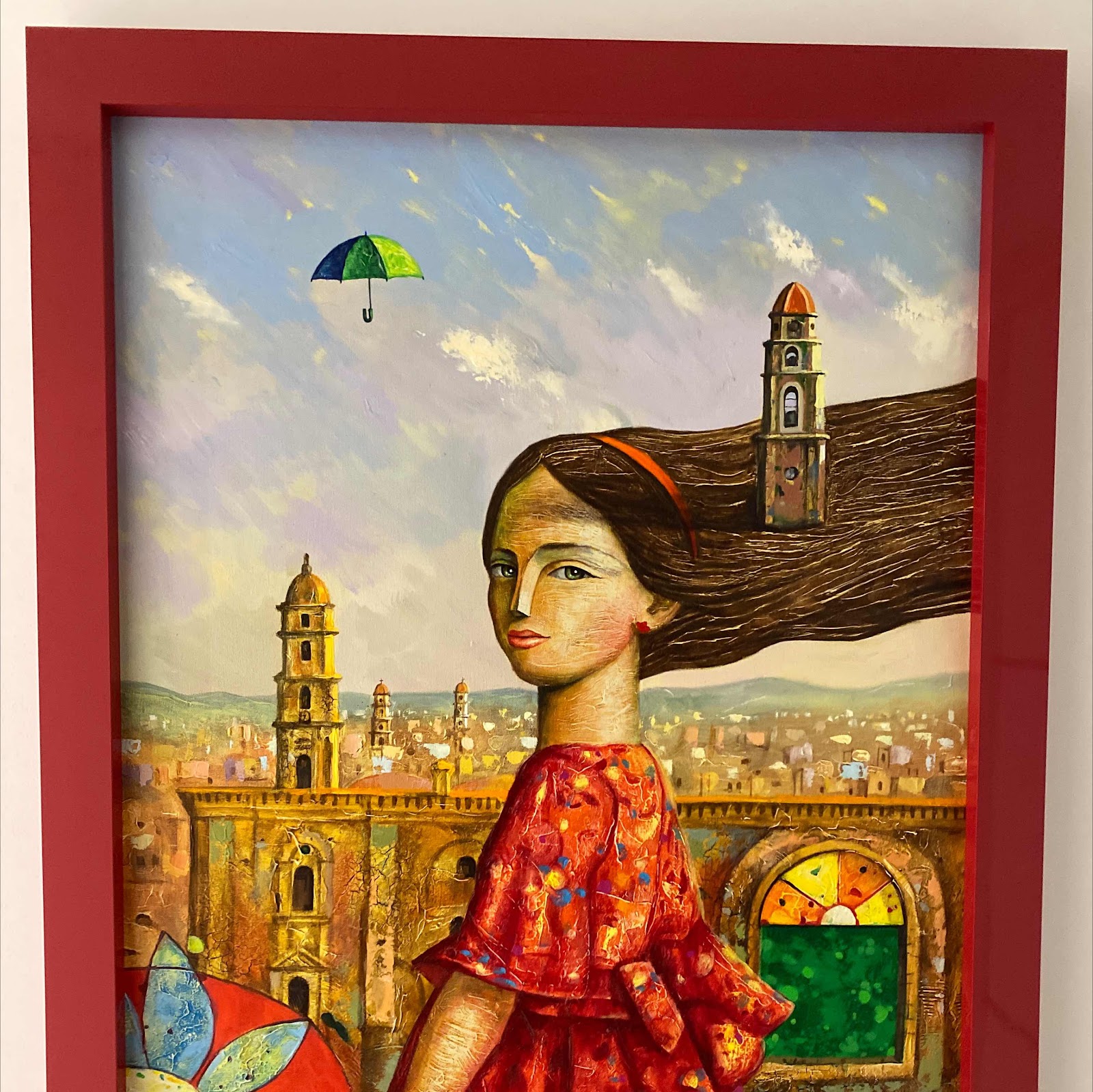
Javier Cruz - Painter

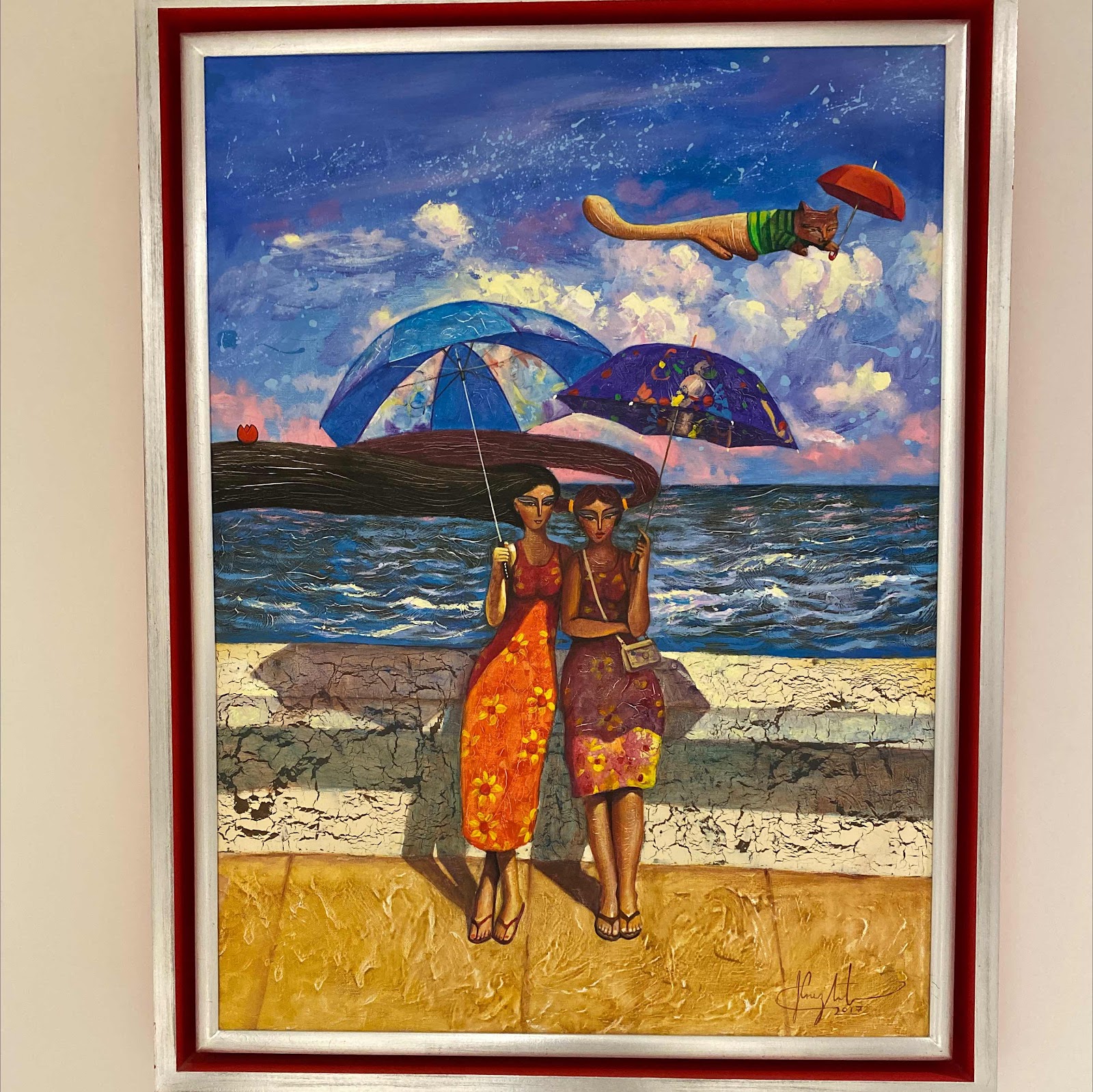
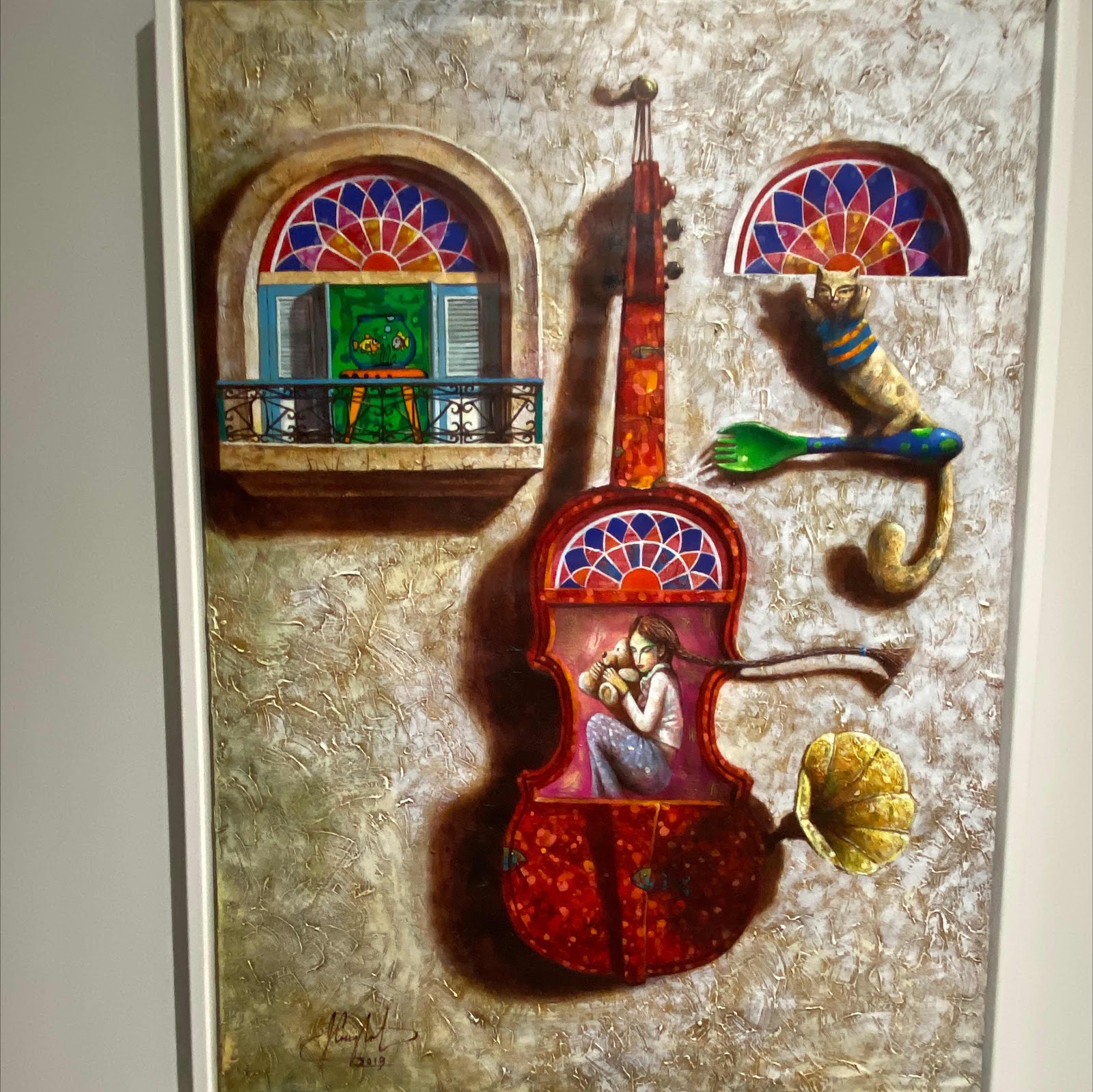
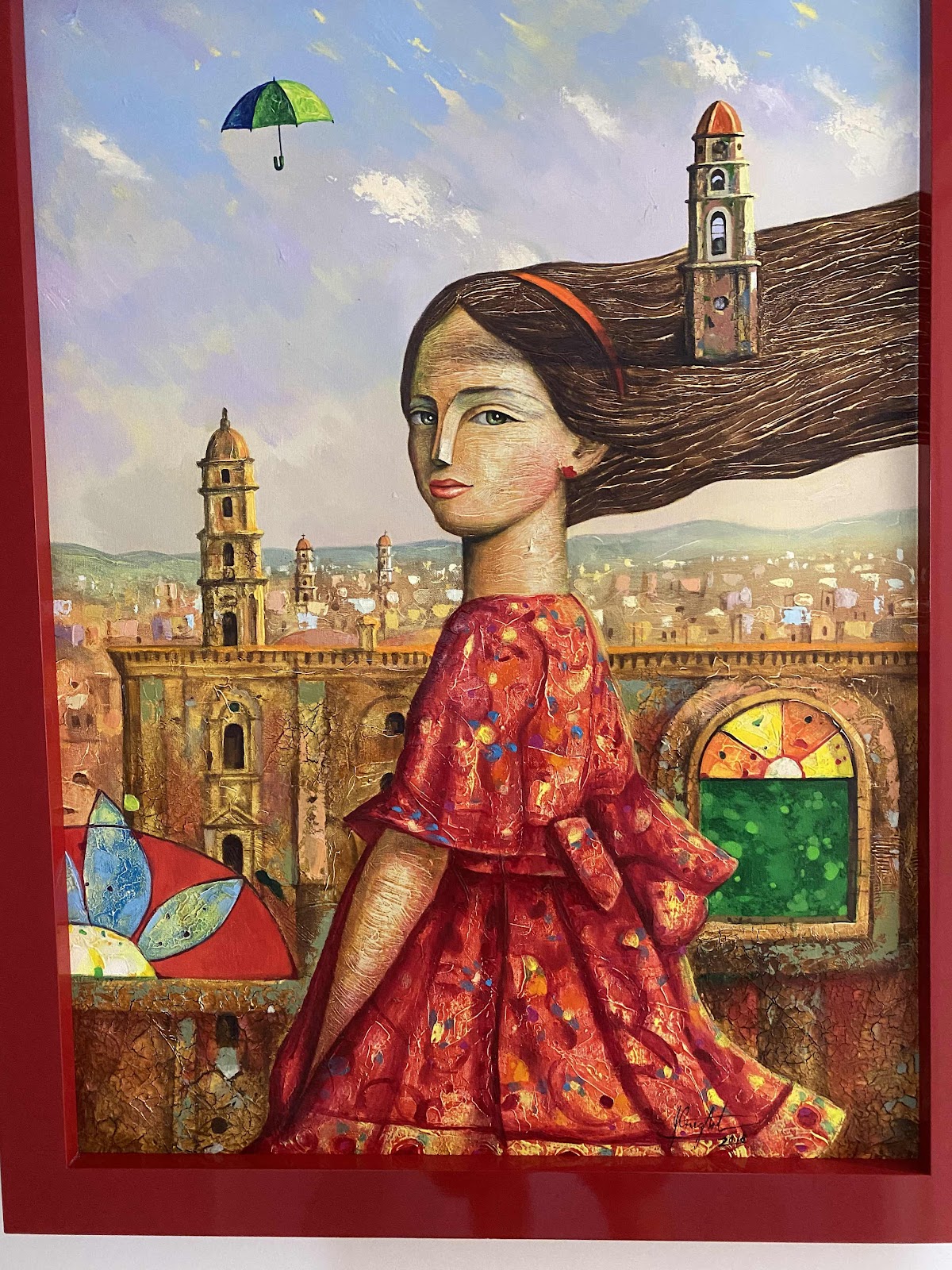
We’ve bought a number of paintings by Javier Cruz of Trinidad, Cuba. Several more have been bought by family members or friends.

Javier Cruz has a few trademark items:
  • Lady’s hair strung out by the wind
  • Cats, also often caught in the wind
  • Bright colors with an old look
Javier Cruz


Saturday, March 2, 2019

My Art Collecting

Here’s a quick summary of what art we’ve collected and are collecting.

Today, we bought from Rahmon Olugunna, a Nigerian artist working out of Chicago, an old painting on paper.  It was the Las Olas Art Festival.

We recently were gifted a gorgeous original Ferjo, Fernando de Jesus Oliveira.

We also have several from his equally famous student: Orlando Quevedo.

There’s also  Florencia Clement de Grandprey. We have commissioned one piece, a Carmen flamenco dancer from her. Plus we have a black and white. Both are on upholstery.

Mira - We have a table and four chairs, plus two tributes. We have it as a dining room table at home. She exhibits at Effusion Gallery but I can’t find any real info on her.
Miro Table
Miro Table


And we have several contemporary Cuban artists that we’ve bought several from. My wife is Cuban-born so she has spent tons of time down there and gotten familiar with a few we like and some she knows. 


Saturday, December 23, 2017

Who owns the reproduction rights on a painting?


I've long wondered if, when I buy a painting from an artist, have I also implicitly bought out the rights to reproduce the art for commercial purposes?

For instance, these paintings by Fejes, do I have the right to make and publish copies of them?  This is more of a question of principle than of practicality since realistically, I doubt there's  anyone proactively protecting the digital reproduction rights of these paintings. Plus. there's a "fair use" concept that even if I had NO digital rights for commercial purposes, I do have rights to use them for "fair use" which probably includes this sort of article and all sorts of other news and catalog rights.  There's also the fact that Intellectual Property rights don't last forever. Here's a sentence about that which I pulled from the web: "In most countries, copyright protection covers the lifetime of the author (artist) plus 50 years after his death. In a number of countries, this period extends to 70, 90 or 95 years after death."

Still, the question stands. As background, a few points:

1.   Many artists make a point of having a publisher so that their paintings are sold as originals, as limited edition numbered prints, and in larger numbers as prints on canvas or paintings.  In these cases, I think the publisher's role would be to protect the artists rights by objecting to anyone who independently started printing and publishing the artists work.  In these cases, the artist has probably contractually distinguished between selling the original painting and the reproduction rights.

2.   Books, digital images, videos, films, and albums (CDs, records, and digital) are usually sold with an accompanying copyright notice which limits the rights of the purchaser to using the the materials for non commercial purposes and limiting making copies to back-ups.  However, I've never bought a painting (or sculpture) that came with any such message stuck on the back or as part of the receipt. I've asked a few times at galleries when I bought or been shopping about what rights they are selling. In every case, they had no answer and in most cases, they thought that I was crazy just for asking.

3. The difference between a copyrighted work with all rights reserved versus a work-for-hire with all commercial rights sitting none with the person doing the work but with the entity paying for the work. I've worked in the educational publishing and video game development businesses for two decades now and I've long been aware that the developer needs to contract with all the programmers, artists, musicians, and designers to make it clear that they are hired to work on a work-for-hire basis with all the copyright and commercial rights accumulating in the entity paying for the work, not in the people paid to do it.

4. Historically, these work-for-hire contracts can sometimes be negated by courts but only in extreme cases. The one that I have read about was Chorus Line, where many hungry talented dancers were asked as part of an audition for a play, to tell their personal story. These stories were used as the basis for the massively successful Chorus Line play and movie and albums.  Court cases through the decades on behalf of the dancers have argued with some success that they should be compensated as authors with some royalties. I think they have won significant amounts on the basis that the play often used their stories somewhat literally as the script which was not envisaged at all as they auditioned for a part as a dancer.

5.  When a painting hangs in a museum, even a contemporary one still subject to copyright law, the museum often sells postcards and posters of the art.  But, I doubt any royalties are paid. Is this the precedent that the physical owner of a work of art has the rights unless they have been distributed separately by the artist?

Anyone knows the answer?

The question was answered definitely to me by a lawyer.  Painters retain their copyright on paintings when they sell the painting. Period. Clear. It's theirs. If a buyer would like to purchase the rights for the digital copies of a painting, they can.  But those rights are not transmitted in the routine sale of a painting.

Sunday, February 28, 2016

Juan Castilla, Spanish Artist in Paris

This post is not about Emerik Fejes, it's a quick post about an artist named Juan Castilla, a contemporary Spanish artist who has been in Paris since 964.  I bought a painting of his on wood in Paris around 1988 for 6500F, especes. It's around 18 by 24 inches and in the original frame.  The painting name from the original receipt is "jeune femme fleurs cheveux."

AT the time, I very much liked his art and I visited two or three galleries around Paris that stocked it. I had a friend who had also bought his work.  I would have liked to buy more.

I bought it from L'Art en Depot, 21, rue saint-sulpice, 75006 Paris.
I've found a website of his, http://www.juancastilla.fr/, and I thought I'd contact them.

Juan Castilla painting
Juan Castilla painting, 


Saturday, April 11, 2015

A Museum Exhibit Guide with Emerik Fejes, Bought in 79

I bought this guide in 1979 in the summer in Zagreb from the Primitive Art Museum.  I hope nobody minds me reproducing parts of it.

It might now be known as the Croatian Museum of Naive Art.


Quoting the Croatian Naive Art Museum's Website
 

In 1952, the Peasant Art Gallery was founded in Zagreb; from 1956 it operated under the name of the Gallery of Primitive Art, while since 1994, in line with a decision by the Croatian Parliament, its title has been the Croatian Museum of Naive Art. From the very beginning the establishment was organized and run according to strict museological principles, and is thus deemed to be the world’s first museum of naive art.

The Croatian Museum of Naive Art holds more than 1,600 works of art – paintings, sculptures, drawings and prints – mainly by Croatian artists.

The permanent display of the Museum was established according to the maxim:Naive Art as a Segment of Modern Art. Some eighty anthology-piece paintings and sculptures of a score of classics of the Croatian Naive are on display, from the early thirties to the 1980s. The focus is on Croatian artists – of the celebrated Hlebine School, and a few of the more highly-valued independent artists. In conjunction with their works, artworks of significant artists of other nations are also on show.


Monday, May 28, 2012

Buying Emerik Fejes Paintings

The following story is excerpted from an Oral History of Burton Edelson, March 6, 2001...This section is in response to a question suggested by Daniel Edelson: 


His name was Emerik Fejes. We visited him in Novi Sad, Yugoslavia in 1967 (near Zagreb). Betty and I had gone to Belgrade for an international space conference that was being held there. That was behind the iron curtain in those days. A friend, Irwin Hersey who was at the conference, was in the art world and had known Fejes. He had bought some paintings from him and had them in his hotel room. So we went up to his room and he showed us his paintings. They were terrific. We liked them. He suggested we go to Novi Sad and get some of our own.


So Betty and I and a guy by the name of Don Sandler, who was working for Hughes Aircraft Company and who had a little Porsche automobile, decided we would drive to Novi Sad, about 100 kilometers from Belgrade, but it took several hours to get there. We had to go on a primitive dirt road. We found Fejes and his wife in an upper floor apartment. Fejes was a retired button maker. He started painting on his own. He was a complete primitive, a naive as they say. He painted with his paints in little bottle caps, and he painted with the back of a paper match.  Fejes had a whole pile of paintings in his apartment. We picked out one that we liked and asked him how much it was. He didn’t speak English but knew a little German. So we used quite a bit of sign language. There was some confusion because they had just changed from old dinars to new dinars, and it was either 100 to 1 or 1,000 to 1. The dinar wasn’t worth much, so we weren’t quite sure what it was. We thought we were buying one painting, but he took ten of them and gave them to us for the amount of money that we had. I later figured out that we paid about $13.00 apiece for them, and he was glad to get it. These were paintings that he’d done from post cards. He had never traveled, never been anyplace, and his wife was kind of intolerant of what he was doing until he was discovered. She had thrown out a lot of his old paintings.

We brought the paintings back to London and my colleague there, Jack Carter, admired them. So I said, “Well, we probably can get some more.” So I wrote to a Marine Corp captain that I met who was in the embassy and sent him a check for $200.00--Jack put in $100.00 and I put in $100.00--and asked him if he would go to Novi Sad and buy some paintings from Fejes. We gave him some post cards for him to copy which he wouldn’t copy, but he did get paintings from him. So all together we had 23 I think.

We brought the Fejes paintings back to the U.S. with us. There was an art gallery in New York, the St. Etienne Gallery, run by Otto Kallir who handled primitives. He discovered Grandma Moses. He had some Fejes paintings for sale at $500 each, but he personally didn’t like them and they weren’t selling very well. He put our paintings up for sale in his gallery but they didn’t sell. Then we displayed them a couple of other places and they still didn’t sell. Then one day I got a telephone call from Dr. Kallir and he said, “Do you still have those Fejeses? How many do you have?”

I said, “Yes, I do. I have eleven of them left.”

He said, “Well, I’ll buy them all. We have a German dealer who is buying them.”

So I wrapped them up and sent them up to him, and he sent me $500 apiece for them. So I got a check for $5,500. Some of it was Jack’s and some of it was mine. I remember stopping on the way home after I got the check and buying a case of champagne.

I think Fejes was written up in a magazine as well.

Yes, he has been over the years. I don’t know whether Yugoslav primitives are still in demand or not. He’s not one of the top Yugoslav painters, but he’s well enough known so that he’s in many collections. His paintings now sell for several thousand dollars.

More background
This excerpted from an Oral History of Burton Edelson, March 6, 2001, draft 3.....The following is an interview with Burt Edelson. The interview is taking place on Tuesday, March 6, 2001 in Burt’s home in Chevy Chase, Maryland. The interviewer is Ellen Robinson Epstein. These tapes were commissioned by Burt in honor of his 75th birthday.

One of the questions that Danny sent in was that in Yugoslavia you discovered a painter that you liked, who you actually sent me to see, which I had totally forgotten about until Danny sent this question in.

I sent you to see?

Yes, because I went to Yugoslavia in 1968 and you had just found him. You said, “Oh, go meet him.”

And did you?

Yes.

I had forgotten that, too.

I had totally forgotten about it. He said that he wants you to tell the story about purchasing these paintings.

Okay. I can tell you that quickly. His name was Emerik Fejes.